Idm Meaning in Text: What It Means and How to Use It?
The abbreviation “IDM” might just be one of those cryptic phrases that could change the way you connect online. In this article, we’ll explore Idm Meaning in Text, unlocking its significance and usage in everyday conversations. Understanding such slang can enhance your texting game, making your communication clearer and more relatable.
Texting has its own language, filled with acronyms and abbreviations. A common term used is “IDM,” but many might not grasp its full meaning in text. This article tells what do idm mean in text, the nuances of IDM, shedding light on why it matters in today’s digital interactions.
What Does Idm Mean in Text?
In the world of digital communication, understanding the IDM meaning in text can unveil layers of conversation that might otherwise go unnoticed. The most common interpretation, “I Don’t Mind,” serves as a casual agreement among friends. This expression allows for a level of comfort and informality, signaling that a person is receptive to suggestions or decisions without needing to overthink their response.
It reflects a laid-back attitude, often used in scenarios ranging from planning outings to discussing preferences in a light-hearted manner. The IDM meaning in text isn’t limited to casual chats. For tech-savvy individuals, “IDM” frequently refers to “Internet Download Manager,” a popular software tool designed to enhance download speeds and organize files.
This interpretation dives deeper into the realms of productivity and technology, highlighting how a simple acronym can encompass diverse worlds within digital communications. The less common meaning of “Indirect/Direct Message,” which resonates within social media circles. This usage speaks to the nuances of online interactions, prompting users to consider the intention behind their messages and the clarity of communication in various digital landscapes.
IDM Meaning Comparison Table
| Acronym | Meaning | Context |
|---|---|---|
| IDM | I Don’t Mind | Chat / Social media |
| IDM | Internet Download Manager | Technology / Software |
| IDM | Indirect/Direct Message | Rare social slang |
Origin & Background
The IDM meaning in text reflects not just linguistic convenience but also the evolution of digital communication culture. As the social landscape shifted toward instant messaging and social media, brevity became the cornerstone of effective conversation. In this context, “IDM” emerged as a quick and catchy way to say “I don’t mind,” encapsulating a relaxed attitude toward decisions.
This abbreviation allows users to convey their sentiments without cluttering conversations, showcasing the need for speed in a world where attention spans are shorter than ever. The rise of texting has resulted in a language transformation that extends beyond straightforward abbreviations. Each term, including IDM, influences online etiquette and fosters a sense of belonging within digital communities.
How IDM Is Used in Daily Conversations?
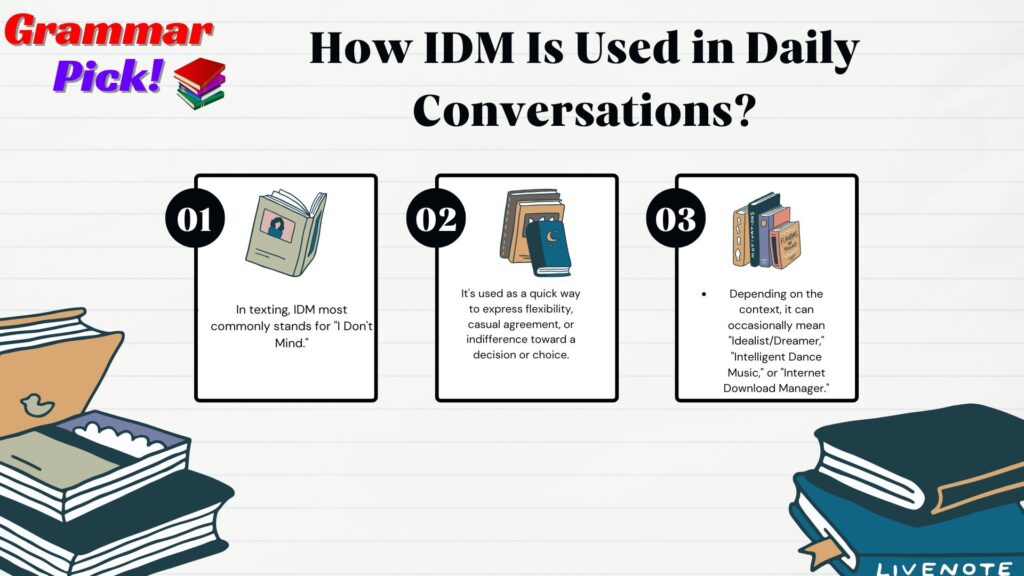
IDM, or “I Don’t Mind,” subtly transforms the dynamics of our daily conversations, making them more fluid and accommodating. When someone poses a question about preferences, be it choosing a restaurant or deciding on weekend plans, responding with IDM can instantly create a relaxed atmosphere.
It indicates a willingness to go along with whatever the other person prefers, which not only fosters camaraderie but also relieves the pressure of decision-making. IDM meaning in text extends beyond mere politeness; it serves as a bridge to deeper connections. When we express that we don’t mind, we open the door for others to share their preferences more freely, enhancing the quality of interaction.
This phrase encapsulates an essential aspect of human communication: the desire for mutual understanding and flexibility. By incorporating IDM into our conversations, we not only simplify discussions but also cultivate an environment where every voice feels valued.
Examples
“Can we leave at 7 PM?” — “Yeah, IDM.”
“Which movie should we watch?” — “IDM, you pick.”
“Should I call you now or later?” — “IDM, whenever it works.”
Other Meanings of IDM (Context Matters)
While IDM meaning in text usually means “I Don’t Mind,” it can have other meanings depending on context.
| IDM Meaning | Context |
|---|---|
| I Don’t Mind | Texting and casual chats |
| Internet Download Manager | Technology/software discussions |
| Intelligent Dance Music | Music genre discussions |
What does “IDM” mean on Snapchat?
“IDM” stands for “I Don’t Mind,” and it has become a staple in the lexicon of social media, particularly on platforms like Snapchat. This acronym reflects a laid-back attitude, perfectly encapsulating the essence of modern digital communication. By using “IDM,” individuals convey their flexibility in accepting plans, decisions, or even opinions without the need for lengthy explanations.
It’s a linguistic shortcut that fosters a sense of connection and ease among friends, making interactions feel more casual and approachable. The IDM meaning in text transcends simple agreement; it can also signal a willingness to compromise or adapt. In a fast-paced environment where attention spans are short, this phrase allows users to express neutrality without coming off as indifferent.
IDM vs Similar Text Slang
Let’s compare IDM with similar expressions:
| Slang | Meaning | Use |
|---|---|---|
| IDM | I Don’t Mind | No preference |
| IDK | I Don’t Know | Uncertainty |
| IDC | I Don’t Care | Disinterest |
Emotional & Psychological Meaning
When someone sends “IDM” on Snapchat, it usually stands for “I Don’t Mind.” This seemingly casual expression can hold deeper emotional connotations than many might acknowledge. In a world saturated with social media interactions, the phrase often serves as both an emotional shield and a bridge.
It communicates a willingness to accept something without resistance, but it may also mask feelings of indifference or resignation. From a psychological perspective, using “IDM” can suggest a complex relationship with one’s own boundaries or emotions. It may indicate an attempt to appear nonchalant while grappling internally with the implications of what is being discussed.
It’s a way of conveying an “easygoing” attitude, yet it can contribute to misunderstandings. One might be giving up ground on an important issue without explicitly stating it, leading to a tension that lurks beneath the surface. Engaging in conversations with “IDM” may allow for connection, but it also flirts with vulnerability, reflecting an emotional duality that warrants deeper reflection.
What IDM Expresses?
- Flexibility
- Indifference
- Trust in the other person’s choice
- Sometimes emotional detachment
When People Use IDM?
- They don’t want to argue
- They genuinely don’t care
- They want to avoid responsibility for a decision
Is IDM Formal or Informal?
IDM, which stands for “I Don’t Mind,” has become a staple of informal communication, particularly among younger generations. Its brevity and casual tone make it perfect for texting and chatting, allowing for quick exchanges without the burden of lengthy explanations.
IDM meaning in text can lighten the mood in casual settings, it poses challenges in more formal contexts. Using such informal language in professional emails can lead to misunderstandings or come across as unprofessional. Academic writing demands precision and a tone that reflects seriousness.
How to Respond When Someone Says IDM?
When someone replies with “IDM,” which stands for “I don’t mind,” they effectively place the ball in your court. This can be an opportunity for you to show decisiveness and leadership in conversation. IDM as a passive response, view it as an invitation to express your preferences or make a choice.
Embrace it as a chance to share what excites you about the options at hand, whether it’s choosing a restaurant, an activity, or even the next steps in a project. Understanding the IDM meaning in text can also deepen your connection with the other person. This response signals comfort and openness. They trust you to steer the conversation, which can be both empowering and daunting.
Examples
- “Got it, I’ll pick something good.”
- “Sounds good, we’ll do that.”
- “Okay, let’s meet at 6 PM.”
Common Mistakes When Using IDM
When someone replies with “IDM,” which stands for “I don’t mind,” they effectively place the ball in your court. This can be an opportunity for you to show decisiveness and leadership in conversation. Embrace it as a chance to share what excites you about the options at hand, whether it’s choosing a restaurant, an activity, or even the next steps in a project.
Understanding the IDM meaning in text can also deepen your connection with the other person. This response often signals comfort and openness. They trust you to steer the conversation, which can be both empowering and daunting. Use this moment to explore new ideas or suggest alternatives, creating a collaborative atmosphere.
Conclusion
Understanding Idm Meaning in Text conversations is crucial for effective communication in the digital age. It highlights how language evolves through technology and social interaction, often creating new phrases that encapsulate complex ideas quickly.
You may also read: WTD Meaning: Texting, Slang & Work Context Explained 2026
FAQs
What does IDM mean in texting?
In texting, IDM means “I Don’t Mind.” People use it when they’re flexible about a decision or don’t have a strong opinion.
Is IDM a positive response?
Yes. IDM is generally a positive and polite response that shows you’re happy to go along with someone else’s choice.
How is IDM used in conversations?
It’s used when someone asks for your opinion or preference, and you’re fine with any option.
Example: “Do you want pizza or burgers?” — “IDM, you choose.”